
Intervention: Season 24
March 2, 2022Forex CFD торговля Индексы, нефть, золото
March 7, 2022
Now that we’ve got the quick facts covered, let’s dive deep into general ledgers and how your business can benefit from them. When making informed business decisions, it is essential to have access to accurate and complete financial information. Helping organizations spend smarter and more efficiently by automating purchasing and invoice processing. Nick Gallo is a Certified Public Accountant and content marketer for the financial industry. He has been an auditor of international companies and a tax strategist for real estate investors.
General Ledger vs. Nominal Ledger
Income statement accounts, like operating and non-operating income, and expenses start afresh with every accounting period. So, at the beginning of the accounting period, these accounts must have a NIL balance. In a general ledger, you can easily find Bookkeeping for Chiropractors information like a sales transaction, purchase transaction, etc. Needless to say, General Ledger is one of the primary books of entry and it forms the basis of your financial statements and helps you in evaluating the financial affairs of your firm. Having a general ledger may help the audit run smoothly, because you can easily verify information if various accounting items are classified and recorded accurately.
- Having proper ledger accounts help you to prepare a trial balance sheet, meaning you can verify the accuracy of your accounts and prepare final accounts.
- A general ledger or accounting ledger is a record or document that contains account summaries for accounts used by a company.
- General ledgers, also referred to as accounting ledgers, are the physical or digital record of a company’s finances.
- So, at the beginning of the accounting period, these accounts must have a NIL balance.
- Following the accounting equation, any debit added to a GL account will have a corresponding and equal credit entry in another account, and vice versa.
- Income statement accounts, like operating and non-operating income, and expenses start afresh with every accounting period.
Accounting 101: How to Master Your Inventory Accounting
A control account operates the same as general ledger account but you record only the summarized information regarding a specific account. It does not contain detailed information related to such an account, so you need to refer to a related subsidiary ledger in order to get details of such a control account. As a result, such a record helps you in tracking various transactions related to specific account heads, and it also helps speed up the process of preparing books of accounts. Every business must strive to maintain accurate accounting records to generate reliable financial statements. A small business will maintain all its accounting records using a single general ledger supported by the books of prime entry such as day-books and journals together with accounting source documents.

What is the Purpose of an Accounting Ledger?
A ledger is often referred to as the book of second entry because business events are first recorded in journals. After the journals are complete for the period, the account summaries are posted to the ledger. The best way to assign GL codes is by starting with a high-level spend categorization. Categorize your most common ang biggest spend items with value of the highest number and then break it down into sub-categories for the same spend. For example, GL codes can be categorized into 1000 for assets, 2000 for liabilities, 3000 for revenue, 5000 for expenses, etc.
General ledger vs. trial balance
In bookkeeping software, to view a general ledger with its all its accounts you must pull up a “general ledger report”. Each account within those categories contains a ledger and that ledger lists, usually in date order, all the transactions (money received or paid out) specific to that account. Now that you’ve learned more assets = liabilities + equity about what a general ledger is in accounting, you’ll be better able to provide your accountant with the information they need to keep your books balanced.

General Ledger Examples
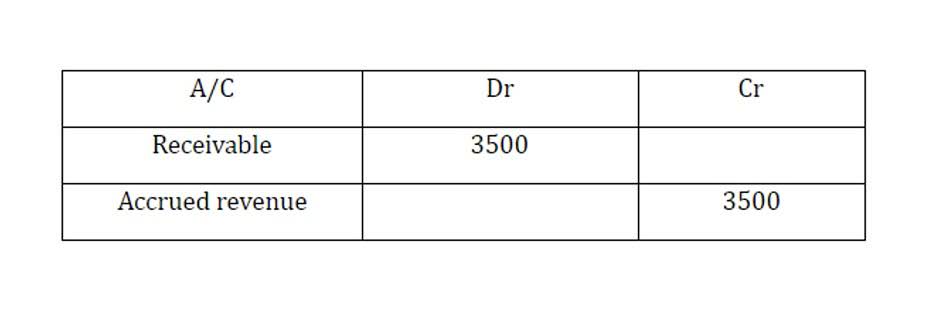
You need to check the transaction amounts recorded as part of your general ledger. If you are preparing your general ledger manually, you will have to keep your source documents handy. These sources will help to verify that the amounts recorded in the ledger accounts are accurate. The credit sales figure of $200,000 would go into the accounts receivable control account.
- This becomes extremely difficult with multiple people working and relying on a single document.
- The double-entry accounting method requires every transaction to have at least one debit (incoming money) and one credit (outgoing money) entry, which must always balance out.
- Some companies use sheet software like Excel for this purpose, but it’s typically not efficient for bookkeeping.
- A control account operates the same as general ledger account but you record only the summarized information regarding a specific account.
- While the list isn’t comprehensive, you can start to see how the general ledger would be huge.
- GLs are general ledger accounts that are used to categorize company transactions.
- To get the most out of your general ledger (and all other reports), set up the company’s structure properly.
- Therefore, the following is the journal and ledger that you need to record into books for such a transaction.
- Here is an example of an accounting system transaction within a general ledger for a fictional account, ABCDEFGH Software.
- A chart of accounts (also called a CoA) is like a financial filing system for businesses.
The following are the steps to a proper general ledger accounts reconciliation in detail. Such an investigation helps you to avoid errors later, and, with an online accounting software like QuickBooks, such a comparison becomes a lot easier. This is because you, or an accounting professional, are no longer required to go through the pain of recording the transactions in the journal first before transferring them to the ledger. A general ledger helps you to know the overall profitability and financial health of your business. In addition to this, the information contained in general ledgers help you to run any audits smoothly.
How are GL Codes assigned?
- General ledger accounts are the basis on which you prepare a trial balance, from which you are able to prepare statements of final accounts, including income statements and balance sheets.
- For this reason, general ledger is also known as the Principal Book of Accounting System.
- In general, a nominal ledger account acts as a more specialized type of record-keeping within the larger system of the business’s general ledger accounts.
- These accounts help organizations keep track of their expenses and revenue-generating activities to ensure that they are financially stable over time.
- She supports small businesses in growing to their first six figures and beyond.
- This system acts as a master document detailing the business’s transactions over some time.
As a small business owner, you need to be aware gl account examples of all the transactions your business has completed in an accounting period. The next step in the general ledger and financial reporting cycle is to prepare an unadjusted trial balance. As such, the journal and ledger both have the most crucial roles in an accounting process to ensure that no transaction is missed out. For any details on the transaction, confusion or rectification, accountants refer to these two books of accounts. As per bookkeeping rules, every financial transaction affects two accounts, causing them to either gain or lose something with equal amounts.
Equity
I have prepared more information about the bookkeeping ledgers which shows how the ledgers are split into debits and credits. A journal entry is a sequential list of accounting entries recording transactions while a GL is a formalized account system where recorded transactions in a journal are posted. The GL is a detailed record-keeping tool, while the P&L (profit and loss) or the income statement reports a company’s profit during a period.
